CryoPaint Installation Guide
The complete product fact sheet and installation guidance for CryoPaint®.
Quart, gallon, and 5-gallon specifications, surface prep, coverage rates, recommended airless paint sprayers, performance limits, and maintenance - all in one place.
Recommended Equipment
The sprayers below are our recommendations. You're not required to use any specific brand or model. For everything below building scale, quarts included, start with the Graco TrueCoat 360 below: it lays the full rate in one or two coats, leaves the smoothest finish, and turns a long day of rolling into a short one of spraying. A roller remains an approved alternative. Use a 3/8-inch nap polyester paint roller rated for all paints and thick paints, and pour the paint into a roller tray and load the roller from the tray. Just know the coat math: a 3/8-inch nap roller lays down about 0.3 oz / sq ft per coat, so the rolled minimum is 3.5 coats (three to build the film, then a half coat to finish the surface and empty the roller), and about 6 to 7 coats reaches the 2 oz / sq ft we recommend. Wait 30 to 45 minutes between coats; spreading the coats over two or three days is fine. If you have any paint left over, use it - thicker coats perform better and last longer. Time is the real cost of rolling, which is why we recommend the sprayer at every size. Either way the paint and the rate are the same, so there is no wrong choice.
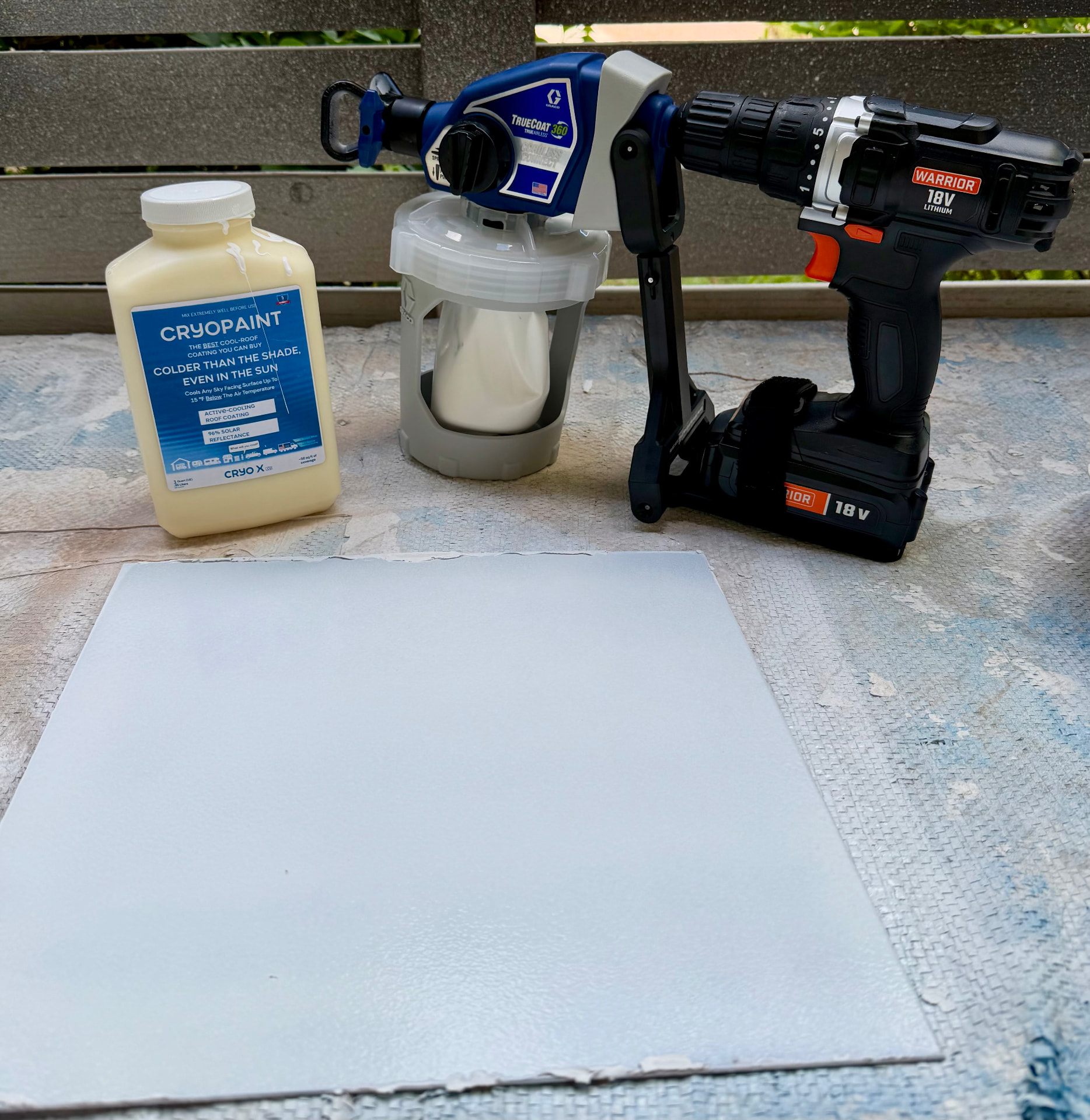
The Graco TrueCoat 360 Handheld Cordless Connect Drill Paint Sprayer is the best choice for everything below building scale: vehicles, RVs, trailers, containers, sheds, hard hats, coolers, panels, and test patches. It is a true airless handheld that runs off a standard cordless drill. It is not an HVLP or turbine gun and it has no built-in blower, so none of the warnings further down apply to it. CryoPaint sprays extremely well through it and the finish is excellent.
Pour a quart straight into the cup and go. You can run a full gallon through it by refilling the cup as you work. It is small, light, and sold at most paint and home improvement retailers for under $200, sometimes as low as $169.
We recommend it over a roller at this size: it lays the full rate in one or two passes instead of six or seven coats. Step up to a cart-style airless only when you move to building-scale work such as full roofs and warehouses. Flush it with clean water immediately after use.
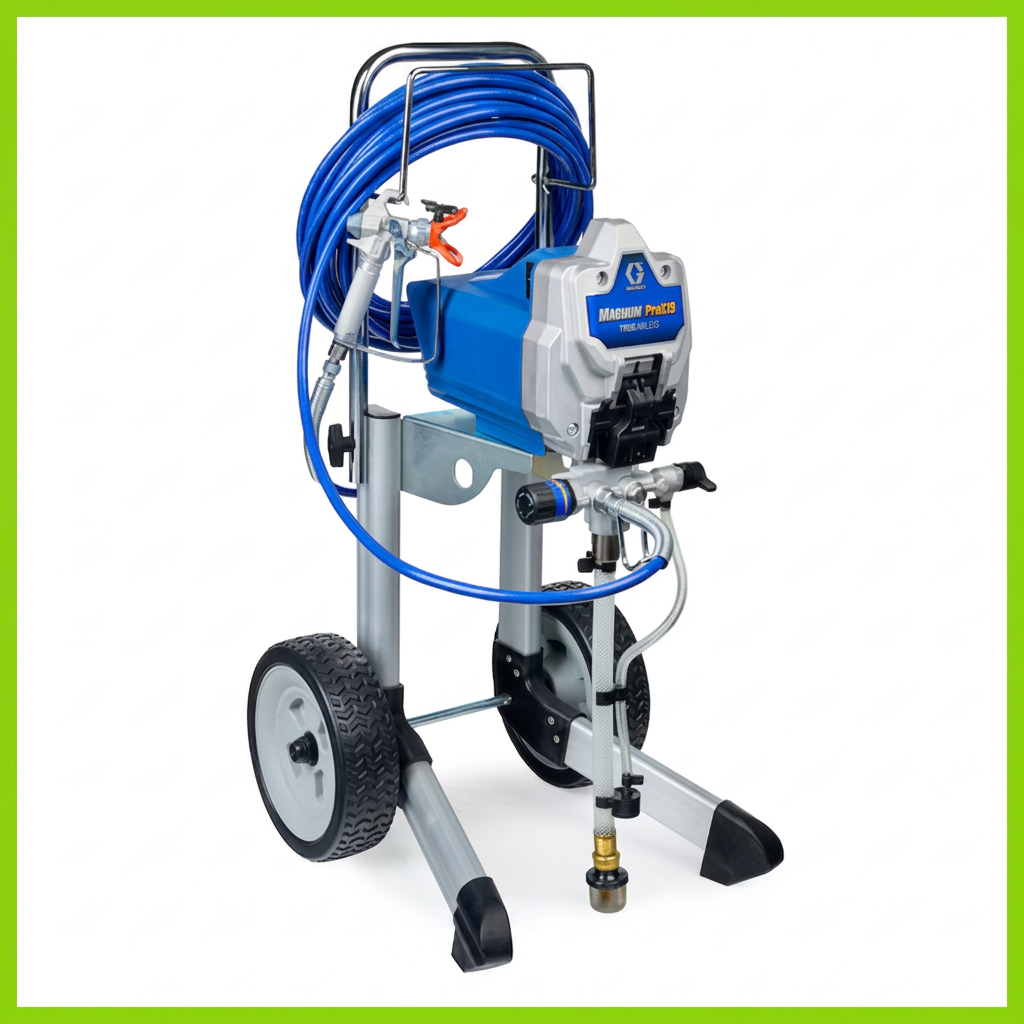
Once you are painting at building scale - full roofs, walls, warehouses, or repeat commercial work - a cart-style true airless paint sprayer like the one pictured is the right tool. It has enough pressure and flow to move thick paint without clogging, so you can cover real square footage without fighting the equipment. If you cheap out on budget or knock-off versions, you may encounter issues, as those often lack the power to move thick paints.
Tip size matters as much as the machine. CryoPaint is thick and heavily loaded with solids, so run the largest tip your sprayer supports. A 517 is the right starting point for the 390 PC, a 515 or 517 for the ProX19, and a 519 or larger for the 490 XT.
Large Volume
- Graco Ultra 490 XT Airless Sprayer
Pro-grade stand or cart sprayer for large roofs, warehouses, and repeat use. Run a 519 tip or larger, and the largest orifice your unit supports.
Medium Volume
- Graco 390 PC Airless Sprayer
Solid pro workhorse for residential and medium-size jobs. Run a 517 tip or larger to keep thick paint moving.
Entry-Level Building Scale
- Graco Magnum ProX19 Cart Airless Sprayer
Entry-level cart-style true airless for small jobs and touch-ups where refilling a handheld cup would slow you down. Run a 515 or 517 tip.
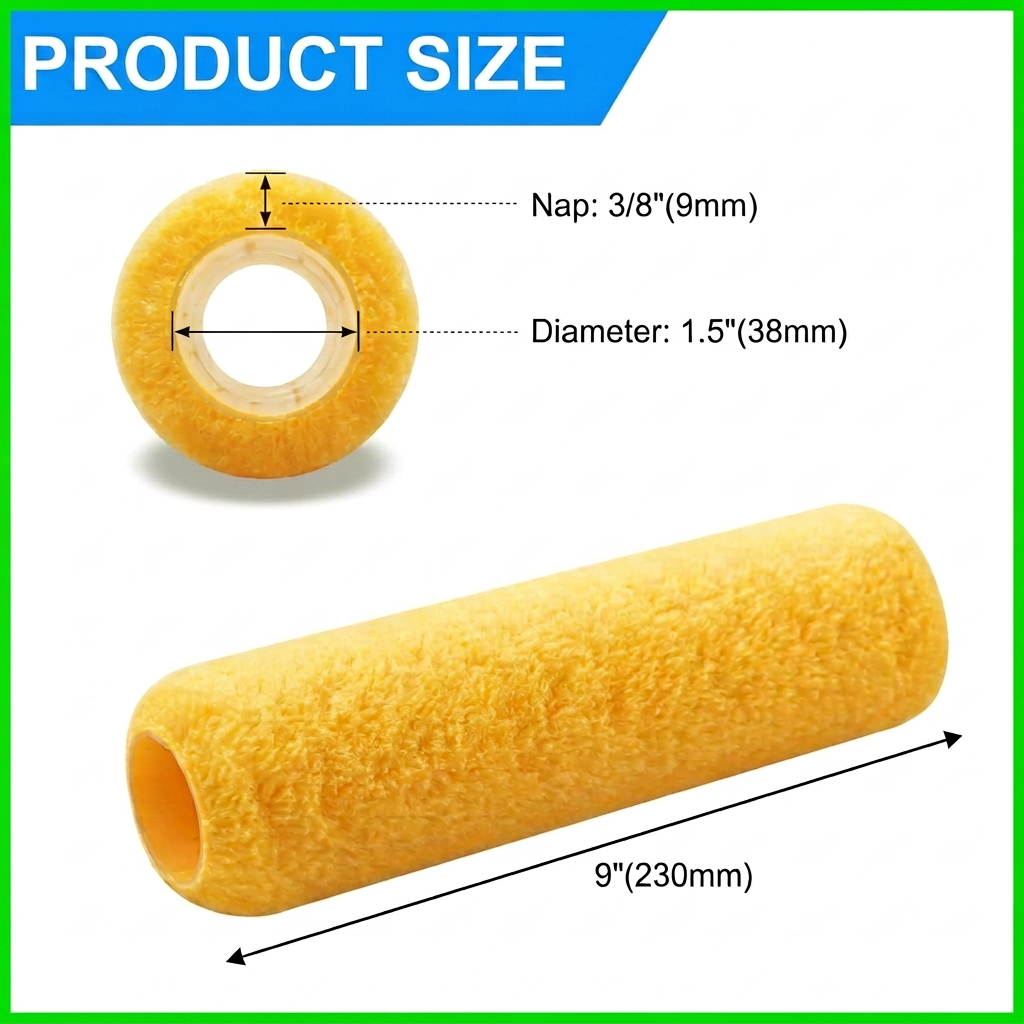
For smaller or simpler projects where you would rather not buy or rent a sprayer at all, a 3/8-inch nap polyester paint roller rated for all paints and thick paints is an approved method. Pour the paint into a roller tray, load the roller from the tray, and roll it onto the surface. Do not dump or pour paint directly onto the surface and try to smooth it out with the roller.
A 3/8-inch nap roller lays down about 0.3 oz / sq ft per coat, so the rolled minimum is 3.5 coats: three coats build the film, then a half coat finishes the surface and empties the roller, a solid 1 oz / sq ft laid down (plan purchases at 1¼ oz / sq ft to cover tray and roller loss). For better performance, keep going to about 6 to 7 total coats - about 2 oz / sq ft, our recommended rate. Allow 30 to 45 minutes between coats, and it is perfectly fine to spread them out: 3 coats one day, 3 the next, then the finisher. If you have leftover paint, use it - thicker coats perform better and last longer. Keep a wet edge and roll in consistent directions to minimize lap marks. An airless sprayer reaches the same rate in one or two coats, which is why it stays our first recommendation for larger jobs.
Never use - HVLP and turbine sprayers
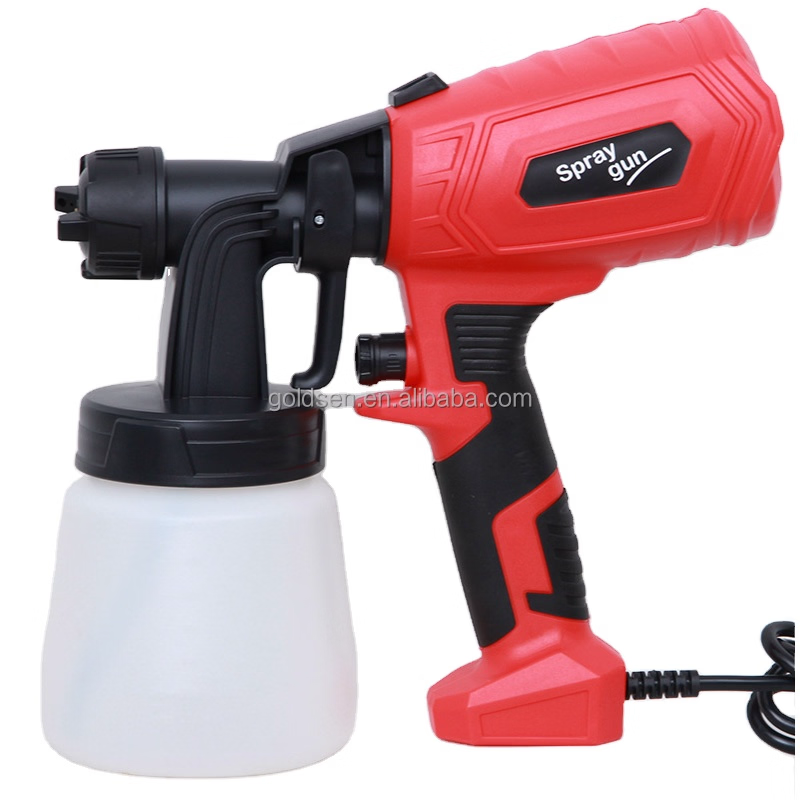
CryoPaint is too viscous for HVLP and turbine-driven systems. They cannot atomize it properly, they clog constantly, and they cannot deposit the film thickness the coating needs. This applies to every HVLP unit regardless of brand or nozzle attachment.
Handheld all-in-one guns that house the blower inside the gun (pictured) are the worst case. They heat the air too quickly, and it does not have time to cool before hitting the paint. This fries the coating mid-air, causing premature cracking of the finish and damage to the unit.
After you spray - flush immediately
CryoPaint is water based, so cleanup is water only, but do it right away. The coating is heavily loaded with barium sulfate, which is abrasive and will wear sprayer packings faster than ordinary latex paint. Flush the pump, hose, and gun with clean water immediately after use, before the coating begins to cure. Do not let it sit in the machine.
1. Product Snapshot
CryoPaint® is a low-VOC, water-based, matte white passive daytime radiative cooling (PDRC) coating that actively cools outdoor surfaces up to 15°F below air temperature. Applied to any flat, sky-facing surface, the paint reflects 94% of sunlight and has an average of 90% 8–13 µm emissivity. In the wavelengths that bypass the atmosphere, it radiates its own heat to space at 90% of the maximum rate possible, acting like a heat-sink for buildings, vehicles, and equipment. The official stock color is Beyond White, a flat matte white that is reflective like a cloud, not like a mirror, so it does not create glare.
Values measured at the 1 oz / sq ft minimum rate over a white primer base coat. Heavier coats measure slightly higher.
Always use a primer!
Use a matte white primer base coat for best results; We recommend always priming with any off-the-shelf matte white primer before applying CryoPaint. It is not strictly required, but every time a customer has an issue, it usually has to do with not using a primer.
Do your research to make sure the primer you choose is compatible with your substrate (asphalt roofs need a bleed-blocking primer, some solvent-sensitive plastics do not work well with certain spray-can primers). A white primer is also required for coverage under the CryoPaint Limited Warranty.
2. How It Works - Key Limits
| Parameter | Guidance | Why it matters |
|---|---|---|
| Surface tilt | ≤ 30° from horizontal (flatter is better) | Radiative cooling falls sharply at steeper angles beyond 30°. That being said, the reflectivity alone will keep your surface at or around the air temperature, regardless of angle. |
| Sky view | Clear line-of-sight to open sky. Do the YMCA "Y" Blue Sky test: put your arms up into a Y, look up; if you see blue between them, it works; if you don't, it won't. | Clouds (especially thick storm clouds), high humidity, trees, glass, or overhangs degrade performance significantly. |
| Climate | Best in low humidity and still air; thrives in hot, clear desert climates. | Convection and moisture dilute the PDRC effect. Sustained wind above 5 mi/hr drags the surface temperature back toward air temperature. |
3. Compatible Surfaces
CryoPaint adheres to virtually any clean, dry, rigid exterior substrate - including painted metal roofs, aluminum, galvanized panels, EPDM/TPO membranes, asphalt roll roofing, concrete, masonry, wood, fiberglass, and most hard plastics, without special primers (you should still use an off-the-shelf primer appropriate for your specific surface). CryoPaint is flexible enough to move with normal thermal expansion and contraction on metal, but it is not flexible like rubber. Do not apply it to fabrics, tarps, canvas, shade cloth, or anything that rolls or folds. The paint film will crack and shed.
Needs extra prep
- Raw, untreated steel or iron - prime first to stop rust.
- Ultra-glossy or hydrophobic finishes/plastics - sand and scuff thoroughly, then prime.
When in doubt
Spray a quick base coat of flat white paint + primer, let it dry, then apply CryoPaint in a single 1 oz / sq ft layer.
4. Surface Prep, Coverage & Application
Our minimum is at least 1 oz / sq ft of CryoPaint as a single, continuous wet layer (or broken up into multiple coats depending on the weather). Using more improves performance, up to 3 oz / sq ft. You may need several quick wet-on-wet passes to reach that deposition rate, but the coating should not flash-dry between passes. (A pass is different than a coat) Pre-measure the amount of paint you need based on your intended coverage rate.
Our minimum rate when sprayed. We recommend 2 oz / sq ft for better performance.
More paint means more cooling, up to 3 oz / sq ft.
Pour the paint into a roller tray, load the roller from the tray, and roll it onto the surface. Do not dump or pour paint directly onto the surface and try to smooth it out with the roller. A 3/8-inch nap polyester roller lays down about 0.3 oz / sq ft per coat. The rolled minimum is 3.5 coats: three coats build the film to about 0.9 oz / sq ft, and a final half coat evens out the finish and works the last paint out of the roller, a solid 1 oz / sq ft laid down. Buy at 1¼ oz / sq ft to cover what the tray and roller cover keep. For real performance, keep going to about 6 to 7 coats (roughly 2 oz / sq ft, our recommended rate). Wait 30 to 45 minutes between coats, and it is fine to spread them across days. If you have leftover paint, use it - thicker coats perform better and last longer.
How many coats? Reducing the amount of coats you do decreases your labor time and therefore labor cost, but you have to be wary of your weather. "Single-coat airless spray" assumes cool, slow-drying weather. If it's hot, windy, or very dry, split the 1 oz / sq ft target into two or more thinner coats to keep the paint from flash-drying and cracking. For example: apply ½ oz / sq ft, wait 30 to 45 minutes, then apply another ½ oz / sq ft to reach 1 oz / sq ft total. The total amount stayed the same, but split across two different coats.
Real-world example: shipping container roofs
- 20-foot container: ~1.5 gallons for the roof only
- 40-foot container: ~3 gallons for the roof only
We recommend rounding up to the next whole gallon because a thicker coat will give you better performance.
Paint the whole object for a fair test
CryoPaint removes roughly 100 watts per square meter, but dark or weathered bare metal absorbs 700-900 watts per square meter. On a continuous roof, wall, or container, heat from the unpainted area flows through the metal back under the paint and overwhelms the cooling. For a valid test, coat the entire contiguous surface, or test on a small, fully separate object like a scrap panel. Read the full explanation on the FAQ page.
OPTIONAL Basic surface-prep sequence for metalFollow these five steps in order. Do not over-prep; a normal metal roof only needs a scuff and clean, then primer and paint.
- Scuff - Lightly abrade the surface with a Scotch-Brite pad or fine sanding sponge to remove any loose paint or oxidation and give the primer something to grip.
- Clean - Wash away dust, grease, and chalk with dawn soap and water. Rinse with clean water and let the surface dry completely.
- Mask - Cover anything you do not want to coat: trim, fasteners, glass, weather stripping, and adjacent walls or panels. Painters tape and plastic.
- Prime - Apply a compatible off-the-shelf matte white primer. White matters: our coverage rates and performance numbers are measured over a white primer base.
- CryoPaint - Spray or roll CryoPaint in overlapping wet passes to reach your target rate (1 oz / sq ft per coat sprayed) for best performance.
Roller coat math - read this before you roll
- Use a roller tray. Pour the paint into a tray, load the roller from the tray, and roll it onto the surface. Do not dump or pour paint directly onto the surface and try to smooth it out with the roller.
- A 3/8-inch nap polyester roller deposits about 0.3 oz / sq ft per coat.
- The rolled minimum is 3.5 coats. The first three coats build the film to about 0.9 oz / sq ft. The final half coat is the finisher: it evens out the surface and works the last of the paint out of the roller, landing you at a solid 1 oz / sq ft.
- Buy at 1¼ oz / sq ft. On a small rolled job about 0.2 oz / sq ft stays behind in the tray and the roller cover, so 1.05 laid down plus that working loss is where the 1.25 planning number comes from. The loss shrinks on bigger jobs, but bigger jobs are where a sprayer starts to make sense anyway.
- Really good results start around 2 oz / sq ft, about 6 to 7 coats. Noticeably less absorbed sunlight, more margin against wear, and a longer-lasting film. It is the rate we use for our own demos.
- Wait 30 to 45 minutes between coats, and feel free to spread the work out: 3 coats one day, 3 the next, then the finisher.
- An airless sprayer reaches the same rate in one or two coats with a smoother finish, which is why bigger jobs go airless. For small projects, the roller's simplicity wins. Either way you end at the same rate: your call, and there is no wrong answer.
Choose Your Rate
Every gallon is the same paint. The rate you apply it at is the real product decision: it sets your cost per square foot, your coat count, and how much performance and lifespan you get.
| rate | $ per sq ft | sq ft per gallon | roller coats | what you are buying |
|---|---|---|---|---|
| 1 oz / sq ft sprayed minimum | $1.95 / sq ft | 128 sq ft | sprayer, 1 coat | The minimum for spraying. Expect 0 to 5°F below air temp. (Meaning at or below air temp, even in direct sunlight) |
| 1¼ oz / sq ft rolled minimum | $2.44 / sq ft | 102 sq ft | 3.5 coats | The minimum for rolling. A roller lays about 0.3 oz per coat, so this is the honest entry point without a sprayer. |
| 1½ oz / sq ft corrugated | $2.93 / sq ft | 85 sq ft | 5 coats | Ribbed and corrugated surfaces need 30% to 50% more paint than a flat roof to match it. Shallow ribs land near 1.3 oz, deep ribs need the full 1.5. |
| 2 oz / sq ft recommended | $3.90 / sq ft | 64 sq ft | 6 to 7 coats | Where results get really good: noticeably less absorbed sunlight, margin against wear, and longer life. The rate we use for our own demos. |
| 3 oz / sq ft maximum | $5.85 / sq ft | 43 sq ft | 10 or more coats | The last increment of performance plus maximum durability. Best on small, high-value surfaces. |
Prices at the $250 gallon. Each step up absorbs less sunlight, but the steps shrink: 1 to 2 oz is a meaningful jump, and 2 to 3 oz buys a smaller final increment plus durability. More paint never means proportionally more degrees. Whatever the rate, apply it in coats of 1 oz/sq ft or less, 30 to 45 minutes apart. Rolled rates are buying numbers: the 3.5-coat rolled minimum lays a solid 1 oz on the surface, and the rest covers what the tray and roller cover keep. That loss shrinks on bigger jobs, but big jobs are where a sprayer saves you hours anyway.
5. Environmental Conditions for Application & Drying
CryoPaint is water-based and dries by evaporation. The conditions during application and the first 2 hours of drying directly affect finish quality and adhesion.
Dew point gap
In humid environments, keep at least a 15°F gap between the air temperature and the dew point for at least 2 hours while the coating dries. Because CryoPaint can cool the surface below the air temperature, the wet paint can reach the temperature at which dew forms. When dew forms, it prevents the paint from drying fully and can cause drips.
Slow drying prevents cracking
The goal is the slowest practical dry. Less wind, less direct sun, and lower air temperatures all slow evaporation and reduce surface cracking. For smaller projects, you can even let CryoPaint dry indoors since it is water-based with low VOC.
Application temperature window
Apply only when air and surface temperatures are between 50°F and 90°F. Below 50°F the water-based film will not cure properly. Above 90°F hot air flash-dries the surface before the coating can level, which increases cracking and hurts adhesion.
Best time to paint: early morning
No matter your region, early morning before sunrise is usually the best window. The surface is cooler, the air temperature rises slowly, and wind is typically calmer.
6. Performance & Real-World Expectations
CryoPaint's cooling power hinges on its ability to radiate heat straight into space. Under ideal conditions (clear blue sky, low humidity (< 30%), light or no wind (< 5 mi/hr)) the surface can run up to 15°F below air temperature.
Cloud cover / obstructions
Infrared radiation must escape directly to space. Use the YMCA 'Y' test: raise your arms in a Y. If all you see between your hands is blue sky (or stars at night), performance is unrestricted. Trees, buildings, or clouds reduce cooling in proportion to how much sky they block.
Humidity
Water vapor absorbs IR; high humidity (~60%+) can cut performance in half.
Wind speed (major factor)
Convection drives the surface temperature back toward air temperature. Blowing on hot coffee cools it, blowing on cold coffee warms it. Breezes and gusts are fine, but sustained wind above 5 mi/hr degrades cooling, and it keeps degrading as speed rises. Corrugation ridges, parapets, and wind shadows from nearby walls or equipment help hold a still layer of air on the surface.
Ambient temperature
The hotter it is, the larger the potential differential between the CryoPaint surface and your comparison surfaces
Application Thickness & Efficiency
Gallon and 5-gallon: mix mechanically with a drill and paint-mixer attachment. We recommend the Plastic ACE 3 in. W × 9.5 in. L Paint Mixer for 1 gallon on a standard electric drill. Mix for several minutes until the paint is fully uniform and no settled solids remain at the bottom. Re-mix any time the paint has been sitting. Do not try to shake a gallon or 5-gallon - shaking will not re-suspend the solids at that volume.
Quart and 4 oz sample: shaking is fine. A mixer is not practical in a quart, so shake it instead - but shake it hard and for a long time. CryoPaint carries a lot of solids and they settle aggressively, so keep going until the paint is completely uniform with nothing packed at the bottom, and shake again any time it has been sitting.
Do not thin, mix in additives, or apply a top-coat. CryoPaint is engineered as the final finish layer; covering it can yellow and trap dirt, and thinning it lays down less film, and both cut performance.
Corrugated roofs: apply 30% to 50% more than a flat surface, so 1.3 oz / sq ft to 1½ oz / sq ft depending on rib depth, with steeply corrugated roofs at the top of that range. Flat roofs: use the standard 1 oz / sq ft. The ribs add real surface area compared with a flat top-down measurement, so corrugated panels need extra paint to get the same coverage.
Contact Cryo X directly if you have questions about how CryoPaint will perform on your roof.
7. Maintenance & Longevity (leave it alone!)
The paint should not be manually cleaned. Ever. CryoPaint is naturally cleaned by water. You can use a hose to wash it manually, but never scrub CryoPaint. If you have cosmetic damage or unnatural weathering that occurs in your specific environment, it's better to clean CryoPaint with water and then apply more CryoPaint over it rather than scrubbing it. CryoPaint can be applied to itself without a primer.
Do not scrub the paint, and do not use chemicals to clean it. Avoid abrasive scrubbing, harsh chemicals, high-pressure power-washing at close range, and heavy foot or vehicle traffic. The coating is not designed for high-touch or load-bearing applications.
Areas with heavy smog and pollution may require more frequent cleaning. If a rinse is needed, use pressure wash with the nozzle held at least 3 ft from the surface.
8. Ordering & Contact
Jordan Fourcher · Founder & CEO, Cryo X Co
Special discounting may be available - bulk orders receive a discount. Contact us to learn more. Gallons and other sizes are available for order at cryox.us. Copies of the SDS and TDS are available upon request.