Cools Surfaces Up To 15°F Below The Air Temperature
CryoPaint® uses physics to actively cool surfaces below ambient temperature.
CryoPaint can be cooler than the shade, even in the sun.
Bulk and wholesaler pricing available. Contact us.
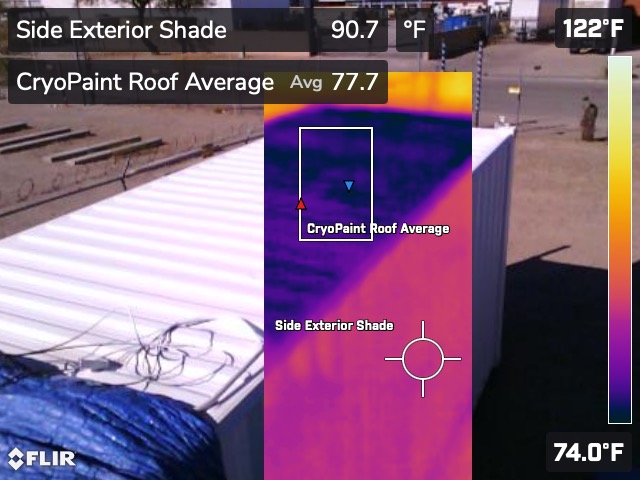
Sub-Ambient Cooling
See the difference!
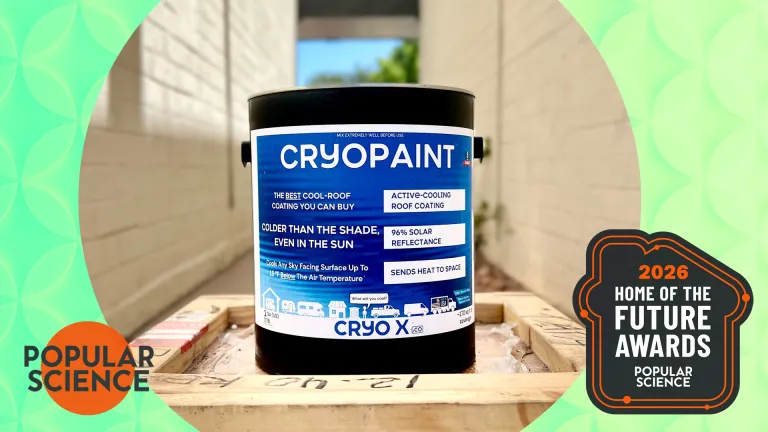
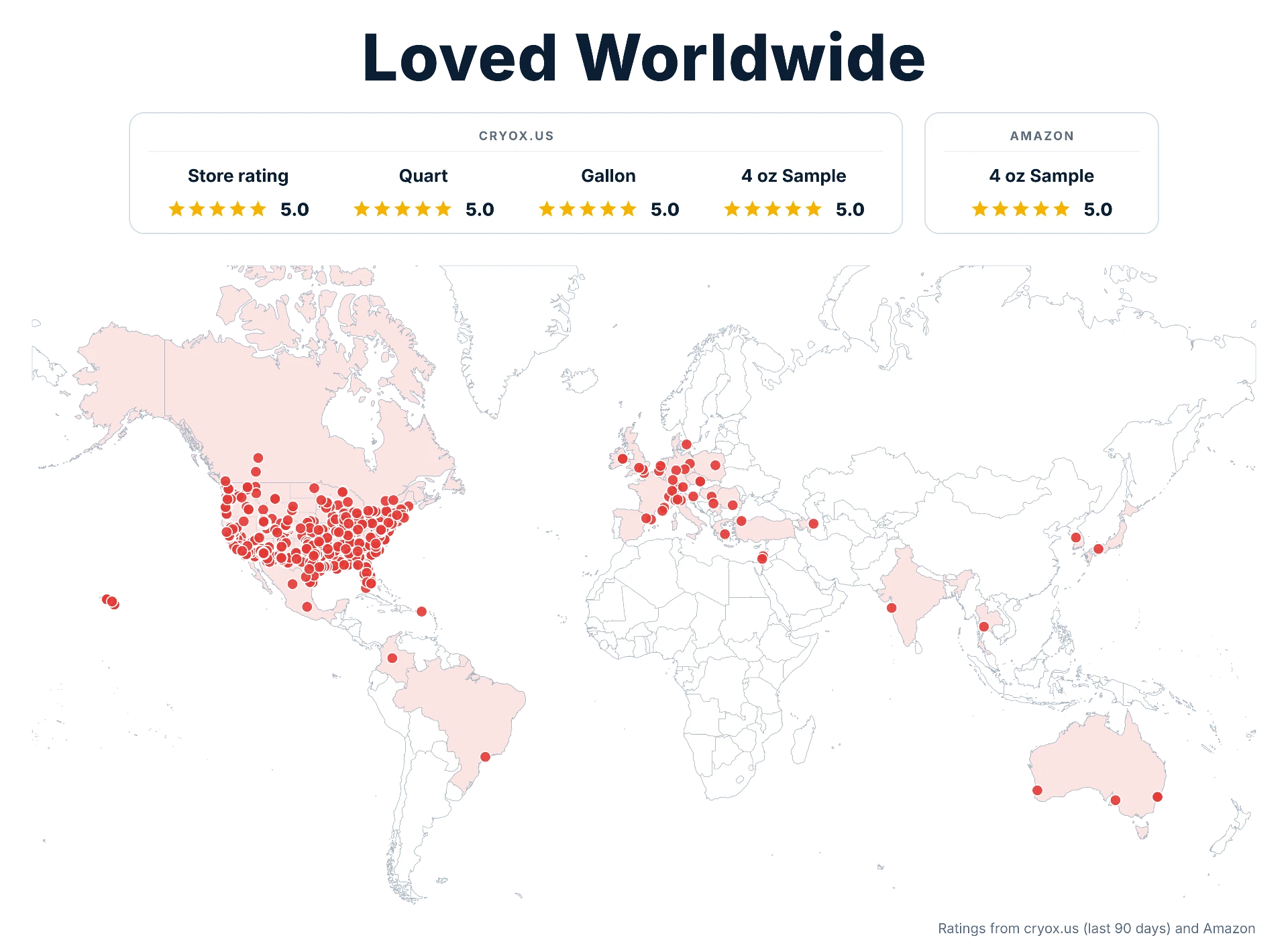
Rated 5.0 on cryox.us (store, quart, gallon and 4 oz sample) and 5.0 on Amazon (4 oz sample), with customers across North America, Europe, South America, Asia and Australia.
CryoPaint Put to the Test
Watch The Action Lab put CryoPaint to the test - from rooftop thermal demos to wearable cooling experiments.
Not an ad or sponsored video. Action Lab earns no commission. This video is a genuine user video.
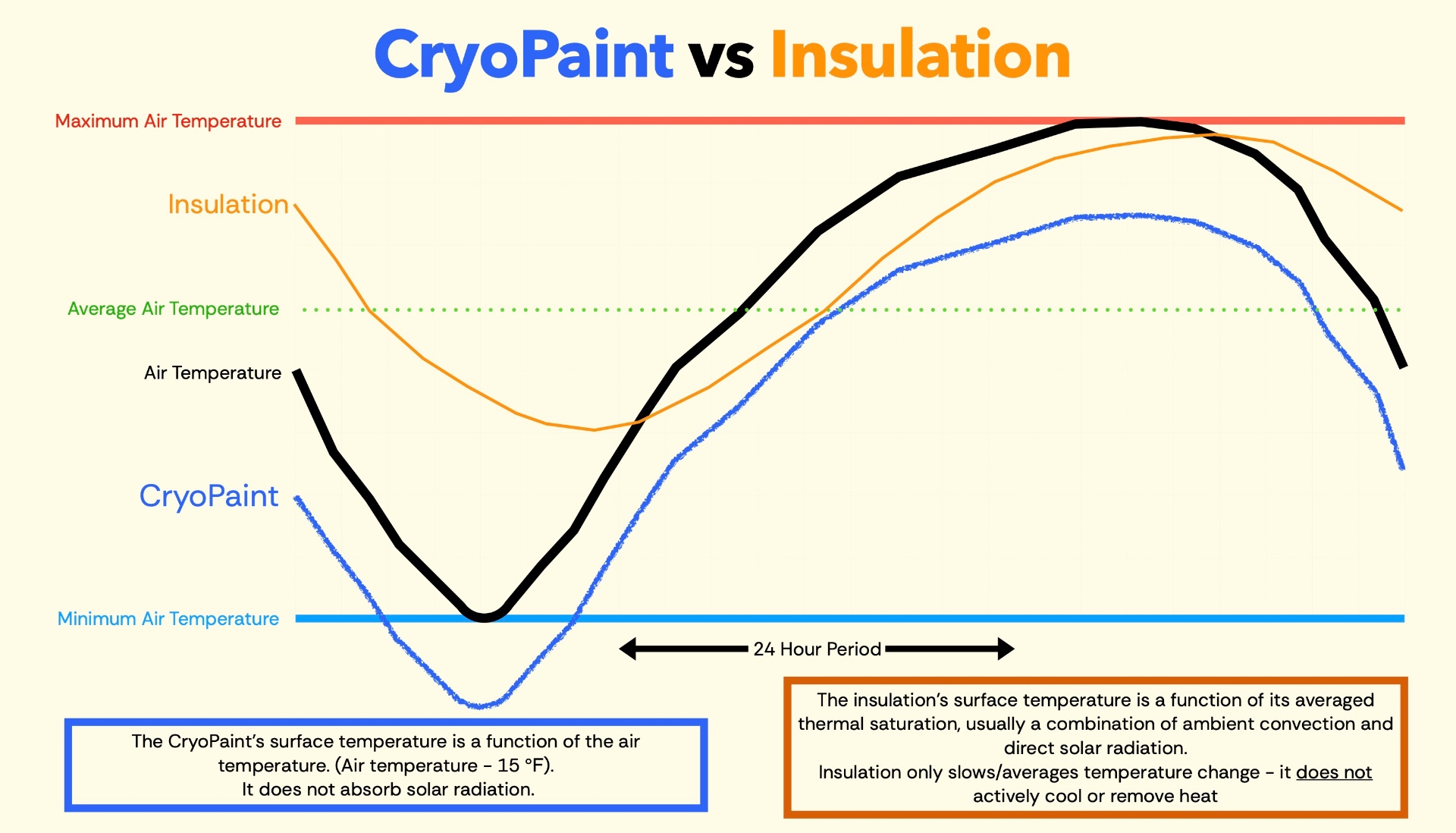
Cooling With Physics
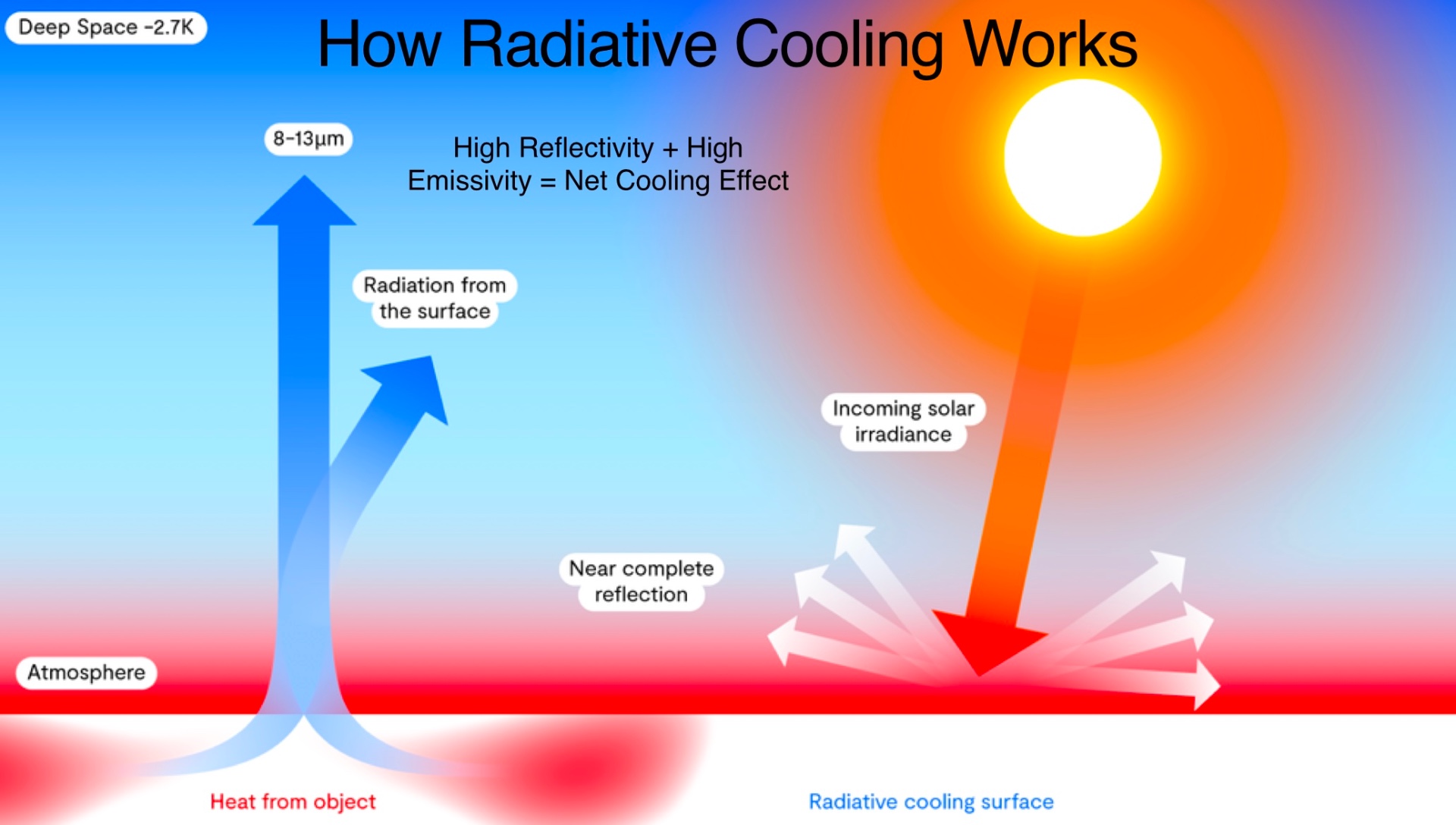
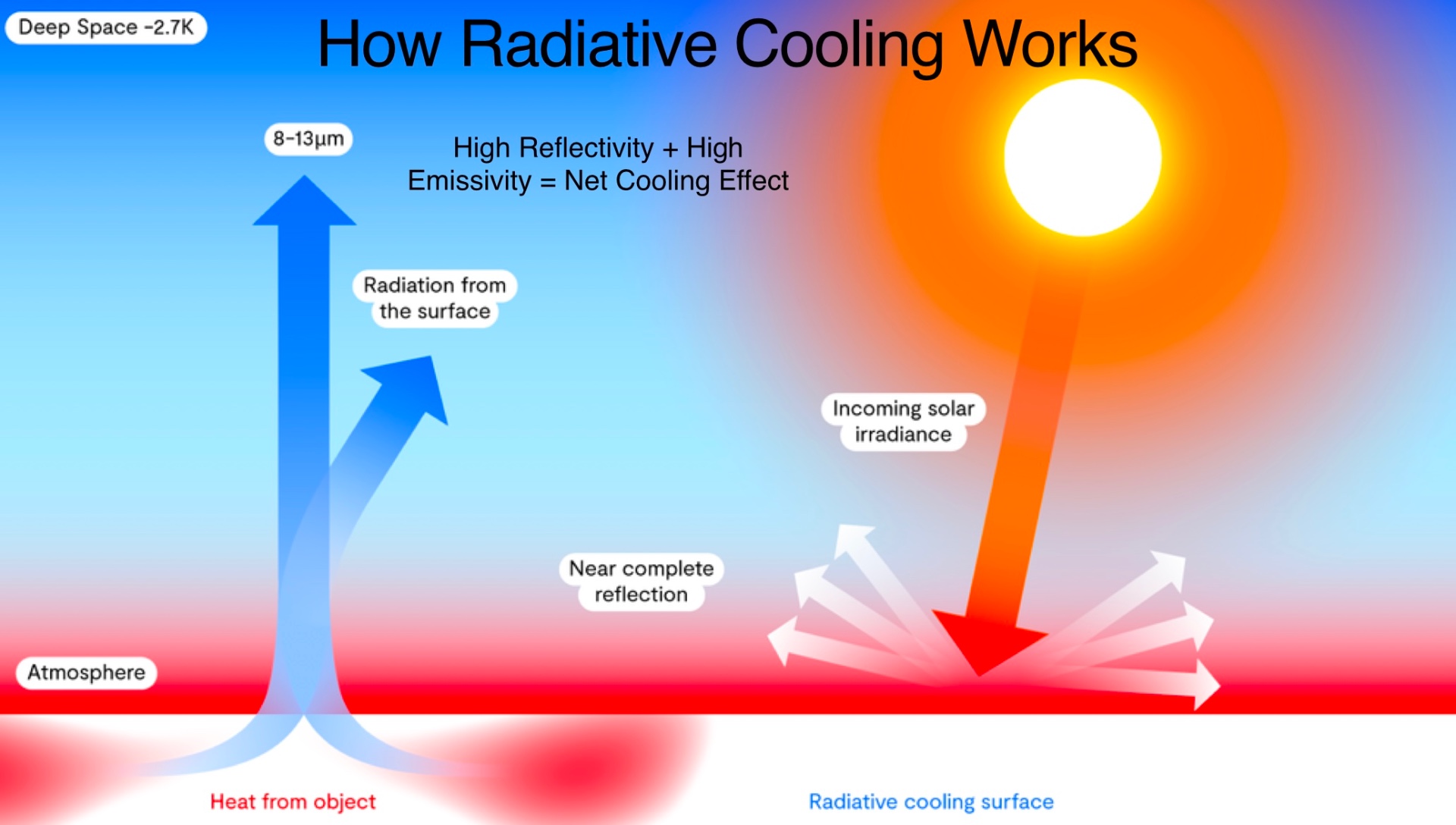
CryoPaint reflects nearly all sunlight while also actively sending heat into space. Applied to any sky-facing surface, this physics based cooling system keeps surfaces up to 15°F below air temperature - even under peak sunlight.
Reflects Almost All Sunlight: 94% reflectivity prevents heating by bouncing solar energy away
Radiates Heat to Space: Actively cools by radiating heat directly to outer space via the 8–13 µm Atmospheric Transparency Window
If the sun is heating it up, CryoPaint can cool it down.
How CryoPaint Compares
How hot each kind of roof actually gets on a 100°F summer day, in full sun with little wind, measured on top of the roof in the middle of the afternoon. Each bar runs from the coolest to the hottest reading published for that material.
Test conditions. A 100°F day, clear sky, light wind, mid-afternoon, measured on the top surface of the roof in direct sun. No indoor, attic, under-deck or shaded readings.
Method. Peak surface temperatures from published field measurements, adjusted to a common 100°F day using the air temperature each study recorded alongside its own reading. Bare metal is quoted directly from the EPA. Every figure is cited below.
How CryoPaint Keeps Things Cool
Proven physics works to keep your surfaces cooler than the air around them.
Reflects Heat
94% reflectivity bounces away almost all sunlight (way better than regular white paint), so your surface doesn't heat up in the first place.
Radiates Heat Away
90% 8–13 µm emissivity: in the wavelengths that bypass the atmosphere, it radiates its own heat to space at 90% of the maximum rate possible.
Net Cooling
The combination loses more energy than it absorbs, keeping surfaces up to 15°F below air temperature - even in direct sunlight.
Values measured at the 1 oz / sq ft minimum over a white primer base coat. Thicker coats have better performance.
Space-Age Technology, Simple Application
This same cooling principle is used on spacecraft. We've made it simple enough to paint on your roof, RV, or building with our sprayable formulation
Learn How Our Technology WorksBenefits That Matter to You
CryoPaint delivers tangible advantages beyond what conventional paints or cooling solutions can provide, making it the obvious choice for solar heat reduction on sky-facing surfaces.
Cooler Surfaces, Instantly
Surfaces stay up to 15°F below air temperature 24/7, with no maintenance. Works immediately after application.
Lower Cooling Loads
Reduces cooling loads on low-insulation enclosures, vehicles, and buildings by removing solar gain at the surface. Pay once for the paint, save on cooling costs immediately.
Equipment Protection
Extend the life of equipment that fails due to heat stress (rubber gaskets, bearings, electronics). Prevent thermal cycling damage in outdoor environments.
Passive by Design
Unlike air conditioning or fans, CryoPaint has no moving parts. Radiative cooling works with the 2nd law of thermodynamics: heat flows from the warm surface to the cold sky and out to deep space.
Low-VOC, Water-Based
Water-based and low-VOC, so it's safer and easier to work with than solvent-based coatings.
Works Best When Needed Most
The hotter and sunnier it gets outside, the greater the cooling advantage. Perfect for desert environments.
Built for the Real World
Fleet Vehicles
Reduce radiant heat that comes through the roof, making the cabins more comfortable and putting less pressure on the HVAC
Mobile Homes & RVs
Lower cooling demand, increase comfort, and protect the roof from thermal fatigue.
Shipping Containers
Passively reduce internal temps better than insulation and cheaper than a mini split.
HVAC & AC Units
Cut solar heat gain on rooftop unit housings and cabinets. Never coat the coils or fins.
Outdoor Electronics
Prevent overheating in radios, sensors, and infrastructure nodes by cooling enclosures.
Pilot-Ready Infrastructure
We work with next-gen edge utilities, transit shelters, microgrids, and desert operations on experimental applications.
By Industry
Send us your square footage and what the surface is, and we’ll get you volume pricing.
Get Volume Pricing
Cryo X Co
We are a deep-tech materials company pioneering Passive Daytime Radiative Cooling (PDRC) technologies for real-world applications.
Innovative Cooling
Our core innovation, CryoPaint®, is a water-based active-cooling paint that actively cools outdoor surfaces up to 15°F below air temperature with no emissions or moving parts.
Reliability & Performance
We specialize in scalable, field-ready solutions that improve efficiency, reliability, and safety across electric vehicles, housing, logistics, and energy infrastructure.
Low-VOC, Water-Based
CryoPaint is a low-VOC, water-based formula. It cleans up with water and contains no harsh solvents.
Arizona Roots
Based in Tempe, Arizona, we develop our solutions in one of the hottest regions in the United States - the perfect testing ground for real cooling technologies. We've tested our product over hundreds of hours in AZ.
Solar Reflectivity
8–13 µm Emissivity
Below Air Temp
Values measured at the 1 oz / sq ft minimum over a white primer base coat. Thicker coats have better performance.
“It’s like painting shade wherever you want it"
Proven In The Field
Performance measured in real-world conditions and amongst hundreds of customers. CryoPaint delivers real, measurable results.
Science-Based Technology
Based on established principles of radiative physics and the 2nd law of thermodynamics. Not magic!
Growing Global User Base
Trusted by commercial fleet operators, RV owners, and infrastructure managers across the hottest regions of the world.
1,500 hours in a UV chamber
An outside lab ran CryoPaint through ISO 4892-3 accelerated weathering. The reflectance settled early and then held, and the paint never chalked.
See the test resultsCommon Questions from Skeptics
We understand you might have doubts (you can always buy a sample). Here are straightforward answers to the most common questions. If you have other questions, please contact us through the contact buttons on the page and we will be more than happy to answer.

Don't think radiative cooling is real? Check Wikipedia.
Does it really cool on its own?
Yes. CryoPaint actively cools surfaces through PDRC Technology (Passive Daytime Radiative Cooling). It reflects sunlight and emits heat through the 8–13 µm atmospheric transparency window directly to outer space.
How much cooler will my surface actually get?
Under ideal conditions (below), surfaces can easily run up to 15°F below air temperature. Even in less ideal conditions, CryoPaint still significantly outperforms standard white paint. Film thickness matters too. One ounce per square foot gets you most of the way there, and building up to 2 or 3 oz adds a few more degrees, not another fifteen.
- Flat surface
- Low insulation
- Clear sky (no clouds)
- Low humidity
- Still air (under 5 mph sustained wind)
- No obstructions
What about cloudy days or humid climates?
Performance is best on clear, sunny days with low humidity. Clouds and high humidity severely reduce cooling effectiveness.
Is it worth the cost compared to other cooling coatings?
CryoPaint is fundamentally different than other 'cooling coatings' because it can physically remove heat out of a surface. This means it offers unrivaled performance in the hottest regions of the world. If you want the best, you get CryoPaint.
Custom colors are now in beta
Need a specific color for your project? We can make custom colors on a per-order basis, working with you to get close to the color you need while delivering very good performance. Custom colors have different pricing and lead times from stock Beyond White CryoPaint.
Ask about a custom colorSample Bottle
Gallon Bucket
~64 sq ft at 2 oz / sq ft (recommended)
~43 sq ft at 3 oz / sq ft (maximum)*
(or 3/8" nap polyester roller - about 0.3 oz per sq ft per coat, 3.5 coats minimum, 6 to 7 coats for best results)
Bulk and wholesaler pricing available. Contact us.
When CryoPaint Works Best
CryoPaint's cooling power depends on sending heat straight into space. Ideal conditions: clear blue sky, low humidity, and still air - wind is one of the biggest real-world performance factors. Best on relatively flat, sky-facing surfaces with little-to-no insulation beneath.
View of a Clear Sky
💡 Maximum slope: 30 degrees
The YMCA Y test works for angled surfaces too!
Low Humidity
Still Air
Slight breezes and gusts are nothing to worry about. Sustained wind above 5 mph is where performance starts to degrade, and it keeps degrading as speed rises.
Mitigate with structure: corrugation ridges, parapets, and wind shadows from nearby walls or equipment help keep a still layer of air on the surface.
Hot Weather
Clean Air
Day and Night
How Much Paint to Use
One ounce per square foot is the minimum, not the target. More paint means more cooling.
Minimum
1 oz / sq ft
The floor for spraying, and the rate our published performance numbers are measured at. Most of the cooling is already here.
Recommended
2 oz / sq ft
Twice the material. The coating absorbs noticeably less sunlight and holds performance better as it ages and wears.
Maximum
3 oz / sq ft
The most we recommend anywhere. Reflectance and emissivity both peak here, and there is the most material to wear through before performance starts to drop.
Corrugated or ribbed
1½ oz / sq ft minimum
The ribs add real surface area, so these surfaces need more paint per flat square foot. Roll or spray at 1½ oz / sq ft and up.*
What More Paint Actually Buys You
Every extra ounce cuts the amount of sunlight the coating absorbs by roughly 10 to 15 percent compared to the coat beneath it. Going from 1 oz / sq ft to 3 oz / sq ft cuts absorbed sunlight by about a quarter overall.
Thicker film also buys things a reflectance number does not show. More tolerance for thin spots and missed coverage. More thermal mass, so the surface swings less. More material to wear through before performance starts to drop. Better longevity and more consistent performance
Going Past 1 oz
Do not try to lay 2 or 3 oz down in a single coat. A heavy wet coat will crack as it dries. Apply it in coats of 1 oz / sq ft or less, 30 to 45 minutes apart, and let each coat set before the next one goes on.
Important
Mix very well before use - the special ingredients settle. Don't thin it or add anything else.
Choose Your Rate
Every gallon is the same paint. The rate you apply it at is the real product decision: it sets your cost per square foot, your coat count, and how much performance and lifespan you get.
| rate | $ per sq ft | sq ft per gallon | roller coats | what you are buying |
|---|---|---|---|---|
| 1 oz / sq ft sprayed minimum | $1.95 / sq ft | 128 sq ft | sprayer, 1 coat | The minimum for spraying. Expect 0 to 5°F below air temp. (Meaning at or below air temp, even in direct sunlight) |
| 1¼ oz / sq ft rolled minimum | $2.44 / sq ft | 102 sq ft | 3.5 coats | The minimum for rolling. A roller lays about 0.3 oz per coat, so this is the honest entry point without a sprayer. |
| 1½ oz / sq ft corrugated | $2.93 / sq ft | 85 sq ft | 5 coats | Ribbed and corrugated surfaces need 30% to 50% more paint than a flat roof to match it. Shallow ribs land near 1.3 oz, deep ribs need the full 1.5. |
| 2 oz / sq ft recommended | $3.90 / sq ft | 64 sq ft | 6 to 7 coats | Where results get really good: noticeably less absorbed sunlight, margin against wear, and longer life. The rate we use for our own demos. |
| 3 oz / sq ft maximum | $5.85 / sq ft | 43 sq ft | 10 or more coats | The last increment of performance plus maximum durability. Best on small, high-value surfaces. |
Prices at the $250 gallon. Each step up absorbs less sunlight, but the steps shrink: 1 to 2 oz is a meaningful jump, and 2 to 3 oz buys a smaller final increment plus durability. More paint never means proportionally more degrees. Whatever the rate, apply it in coats of 1 oz/sq ft or less, 30 to 45 minutes apart. Rolled rates are buying numbers: the 3.5-coat rolled minimum lays a solid 1 oz on the surface, and the rest covers what the tray and roller cover keep. That loss shrinks on bigger jobs, but big jobs are where a sprayer saves you hours anyway.
Start Cooling Today
Just $1.95 / sq ft ($250 per 1 gal) - Join the growing list of satisfied customers who've discovered the power of radiative cooling technology.
Bulk and wholesaler pricing available. Contact us.
*An airless paint sprayer is our number one recommended application method. The standard rate is 1.0 oz/ft², which is the minimum thickness and the rate our published performance figures are measured at. Heavier coats up to 3.0 oz/ft² give incrementally better cooling and better durability, with diminishing returns above roughly 2 oz. Corrugated roofs should be applied at 1.3 to 1.5 oz/ft², depending on rib depth, with steeply corrugated roofs at the top of that range, since the ribs add real surface area compared with a flat top-down measurement. If a sprayer is not available, roll it on with a 3/8" nap polyester roller rated for thick paints. Pour the paint into a roller tray, load the roller from the tray, and roll it onto the surface. Do not dump or pour paint directly onto the surface and try to smooth it out with the roller. A 3/8" nap roller lays down about 0.3 oz/ft² per coat, so the rolled minimum is 3.5 coats on a flat surface (about 1 oz/ft² laid down; plan purchases at 1.25 oz/ft² to cover tray and roller loss), and about 6 to 7 total coats for the best rolled performance. On a corrugated roof, plan on 30% to 50% more than that, so about 5 coats minimum. Wait 30 to 45 minutes between coats; spreading the coats across two or three days is fine. If you have any paint left over, use it to make your coat even thicker - thicker coats perform better and last longer. It is an estimate, not an exact figure, because it depends on how deep the corrugation is. Any rate above 1 oz/ft² must be applied in multiple coats. Contact Cryo X directly if you have questions about how CryoPaint will perform on your roof.
Last updated: